Is solar worth it? A practical look at cost vs savings
For many sectional title schemes across South Africa, electricity has quietly become one of the biggest and most unpredictable expenses. Whether you’re a trustee managing rising levies, a homeowner watching monthly bills climb, or a managing agent balancing budgets, one question keeps coming up: is solar really worth the upfront cost?
The short answer: yes, but understanding why requires looking at both sides of the equation.
The reality: electricity costs are only going one way
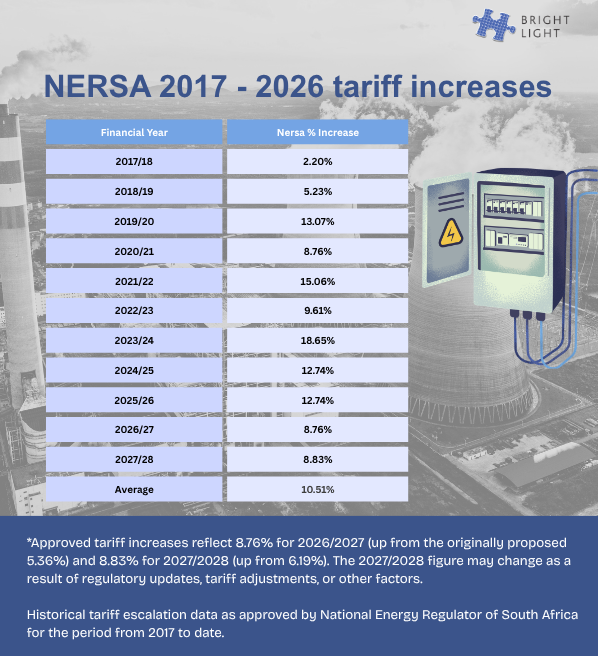
South Africa’s electricity tariffs have increased significantly over the past decade and the trend isn’t slowing down. In 2025 alone, Eskom tariffs increased by around 12.7%, with further increases already approved for the next few years.
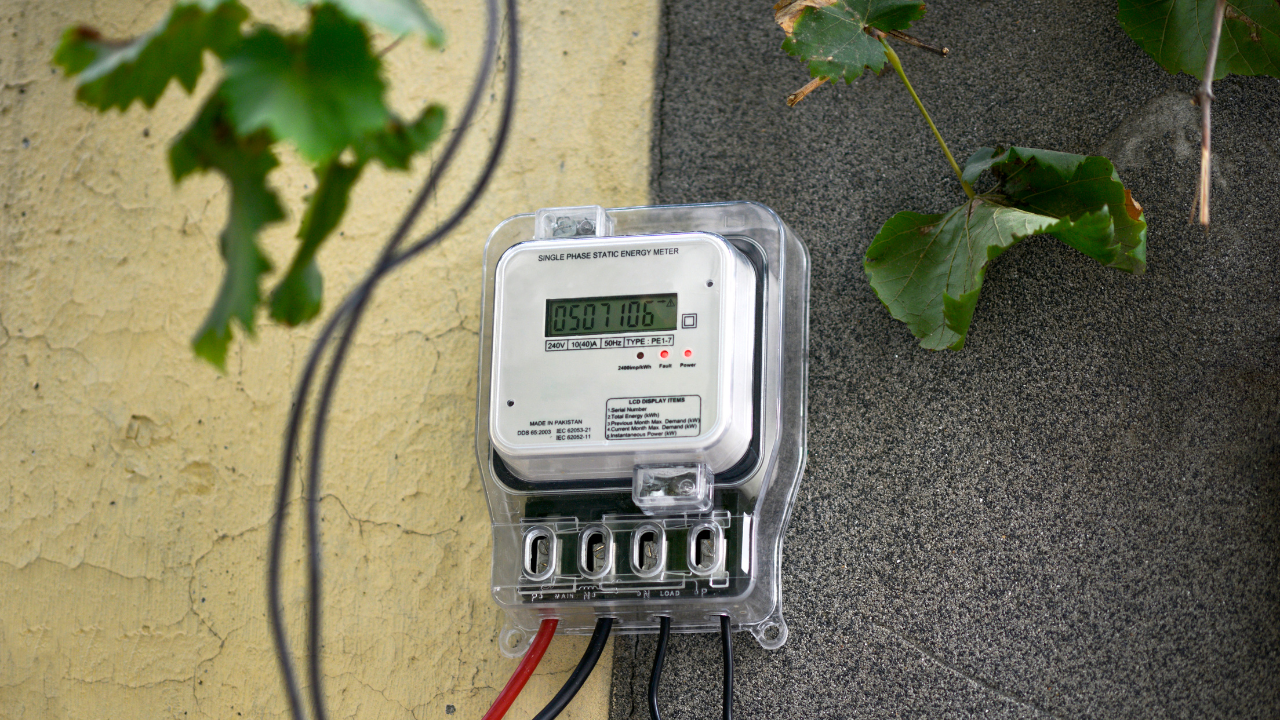
When municipal markups, fixed charges and VAT are added, many sectional title residents are paying between R2.00 and R4.50 per kwh, with typical monthly bills ranging from R1,800 to R3,000 or more.
For community schemes, this impacts:
- Monthly levies
- Operating budgets
- Long-term financial planning
Put simply: electricity is no longer a stable cost, but rather a growing risk.
What does solar actually cost?
Unless you partner with us at Bright Light, where we offer solar and battery backup solutions with no upfront cost, solar installation for a sectional title scheme or large residential unit can be a significant upfront investment. Depending on system size and battery storage, costs can range from roughly:
R70,000 – R180,000 for smaller systems
R180,000 – R300,000+ for larger or shared systems
At first glance, this can feel prohibitive, especially for bodies corporate managing multiple priorities. But focusing only on the upfront cost misses the bigger picture.
Solar starts paying for itself
What makes solar compelling is not the initial spend, but the payback period and long-term return. In South Africa today, typical payback periods range from 4 to 7 years, and systems last 20–25+ years. After payback, electricity is essentially free (or very low cost). In practical terms, this means:
- Years 1-5: system pays itself off through savings
- Years 6-25: significant cost savings accumulate
Over time, some estimates show 300–500% return on investment across a system’s lifespan.
ALSO READ: Smart solar and water solutions to beat rising utility costs
Why solar makes even more sense for complexes, estates and flats
Solar becomes even more attractive in shared environments like sectional title schemes because:
- Higher collective usage = faster payback
Common areas (lighting, security, lifts, pumps) consume consistent power, making savings predictable and immediate. - Protection against tariff hikes
Solar effectively “locks in” your energy cost at a fixed rate, while grid electricity continues to rise. - Opportunity to reduce levies over time
Lower electricity costs can stabilise or even reduce monthly levies for residents. - Increased property value
Properties with solar installations are increasingly attractive to buyers and tenants.
One of the most overlooked benefits of solar is financial certainty. Grid electricity is inflation-linked (and often above inflation), unpredictable, and subject to policy and infrastructure challenges. Solar, on the other hand has a fixed, predictable cost once installed, produces electricity at a much lower effective rate and shields schemes from future shocks.
For trustees and managing agents, this predictability is invaluable when planning budgets and reserve funds.
So, is solar worth it? For most sectional title schemes, the answer comes down to this: If you’re focused only on short-term cost, solar can feel expensive. If you’re planning for long-term savings and stability, solar becomes one of the smartest investments you can make
A smarter way forward
Every scheme is different. Your roof space, energy usage, tariff structure, and funding options all influence the return on investment. That’s why the best place to start is with a tailored assessment.
If you’re exploring solar for your community scheme, Bright Light can help you understand your potential savings, payback period, and system options, without obligation. Get in touch for a custom quote and see what solar could mean for your scheme’s financial future.